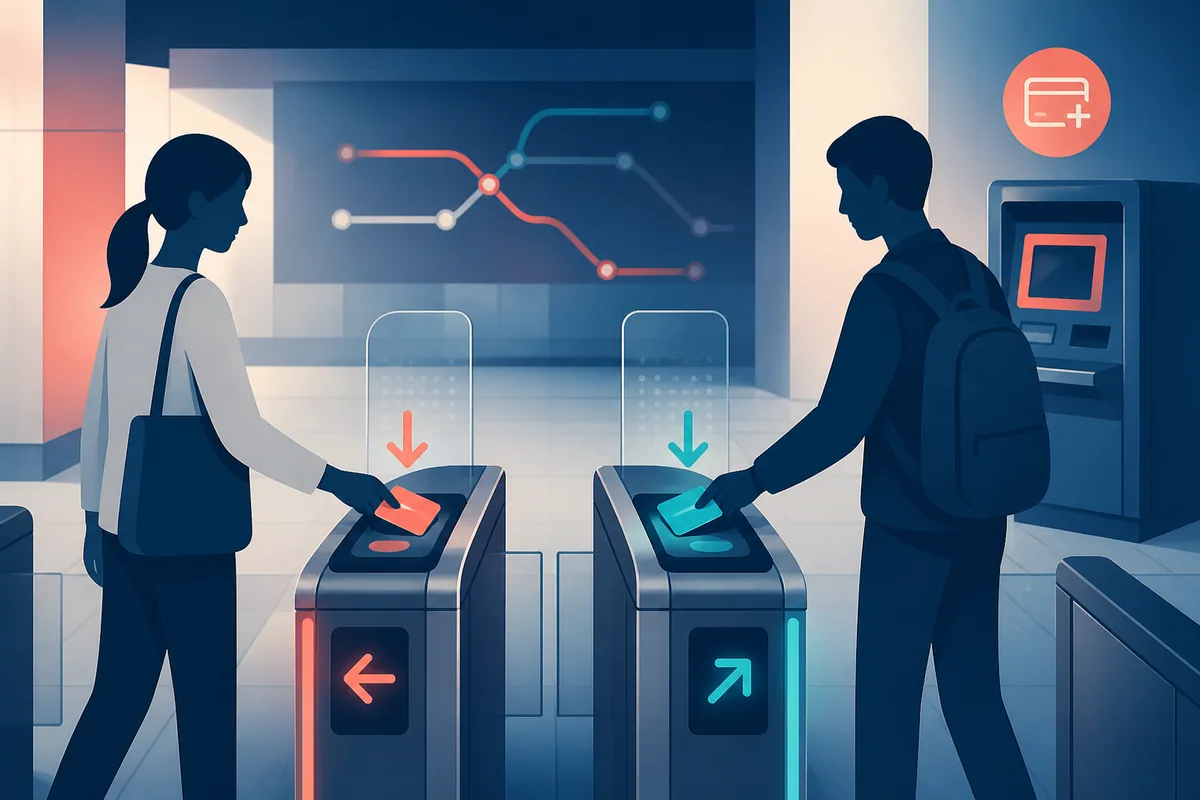
What a standard T-money card actually does
A standard T-money card is a rechargeable payment card. It is commonly used for subways, city buses, some airport transport, taxis and participating retailers. Each paid journey reduces the stored balance. The card itself does not make every ride free, and buying one does not activate a 24-hour or multi-day unlimited window.
That distinction matters because three products that look similar can solve different problems:
| Product | Cost logic | Best question to ask |
|---|---|---|
| Standard T-money | Fare deducted per use | Do I want simple pay-as-you-go transport? |
| Single-journey subway ticket | One rail journey plus a refundable deposit | Am I making only one journey before I can buy a card? |
| Seoul Climate Card | Product price for configured time and coverage | Will my eligible Seoul rides within the window cost more than the pass? |
Official references: Seoul Metropolitan Government public transportation guidance and Korea Tourism Organization transportation-card guidance.
Where to buy and recharge it
Seoul’s official 2026 visitor guide lists participating convenience stores and T-money service centers in Seoul Metropolitan Subway stations on Lines 1–8 as retail locations. Card designs and purchase prices vary, so a decorative card may cost more than a basic one without changing the underlying pay-as-you-go calculation.
Recharge options vary by location and machine. Station devices provide multilingual instructions, but accepted payment methods are not identical everywhere. A safe arrival plan is:
- Buy one card for each traveler.
- Add only enough for the first few planned journeys.
- Keep an alternative payment method available.
- Add more value after checking the balance at a gate, machine or participating shop.
Do not confuse new payment support for the Climate Card with a promise that every ordinary T-money recharge point accepts every foreign card. Read the screen before committing and use a staffed counter when the available method is unclear.
The tap sequence that protects your transfer
For the subway, touch the reader when entering and again when leaving. For a bus, touch when boarding and when getting off. Wait for the reader’s confirmation instead of moving the card past it quickly.
The exit tap is not optional housekeeping. It closes the trip record and allows the fare system to evaluate an eligible transfer. If the reader reports an error, do not repeatedly force the gate. Show the card to station or vehicle staff, because paying again with another card can create two unrelated trip records.
Each traveler should normally use a separate card. One card cannot create two independent subway gate entries at the same moment, and a transfer benefit belongs to the recorded journey on that card. Families should therefore calculate balances per person instead of assuming one shared wallet will work throughout the network.
T-money versus a Seoul transport pass
T-money is often the safer default for an open itinerary because there is no pass window to waste. A Climate Card can still be cheaper when a visitor will make enough eligible rides inside its configured period. The comparison must include only transport the pass actually covers.
Use this sequence:
- List the rides you genuinely expect to take.
- Separate airport, regional and other services that are outside the candidate pass coverage.
- Calculate the T-money or ordinary-fare baseline.
- Add the complete pass cost, including any required physical card cost.
- Compare the two totals without assigning value to rides you did not plan.
Our Seoul transit calculator performs that comparison with versioned product and fare records. If a required value is not verified, it does not invent a break-even result.
Refunds: avoid creating the problem first
The official Seoul visitor guide lists multiple refund channels, with different maximum balances for convenience-store brands and station information centers. Those outlet limits can change. The reliable operational lesson is to avoid loading a large final balance and to confirm the current channel before seeking a refund.
A refund may also involve a service fee, and the purchase cost of the physical card is not the same thing as its remaining transport balance. Keep the card until your final paid journey is complete, then check the balance before leaving the city.
Source: Seoul’s 2026 English guidebook. The guide identifies current retail and refund channels; recheck T-money’s own service information if your balance is unusually high.
Common mistakes and better decisions
| Mistake | Why it causes trouble | Better decision |
|---|---|---|
| Loading the whole trip budget on day one | A large unused balance creates a refund task | Recharge in smaller stages |
| Forgetting to tap off a bus | The journey and transfer may not be calculated as intended | Tap on both boarding and exit |
| Buying one card for two subway travelers | Gates require separate trip records | Use one card per traveler |
| Assuming every airport service is included | Premium or private services can use separate tickets | Check the exact operator and service |
| Comparing T-money with marketing claims | Unplanned rides do not create real savings | Compare only the itinerary you will use |
A simple first-day setup
After arriving, decide your first actual route before buying transport products. If you are taking an individually ticketed airport service, buy that ticket separately and obtain T-money when it becomes useful. If your airport route accepts stored-value transit payment, make sure the initial balance covers that ride plus the next connection.
Save a screenshot of your accommodation name and address in Korean. It will not change the card’s fare, but it makes the final station or taxi connection easier when mobile data is unreliable. T-money is a payment tool; a clear route plan is what prevents the expensive mistakes.